When your pet is suddenly injured or becomes seriously ill, fast answers matter. At Summit Veterinary Urgent Care, we use digital X-rays as part of our urgent care triage process to quickly identify injuries and internal illnesses. X-rays allow us to evaluate bones, the chest, and the abdomen in minutes, so we can make informed treatment decisions without unnecessary delay.
As an after-hours urgent care clinic serving Decatur, Priceville, Huntsville, and surrounding North Alabama communities, we focus on speed, clarity, and compassionate care. Walk-ins are welcome. Our fear-free approach allows owners to remain with their pets whenever possible, and if a condition requires advanced hospitalization, we stabilize first and refer appropriately.
This Article Will Address:
- Why an emergency vet may need to take an X-ray of your pet
- What conditions can be diagnosed with emergency X-rays
- The difference between X-rays, ultrasound, and CT in urgent situations
- How quickly emergency veterinary X-rays can be performed
- Whether sedation is required for pet X-rays
- What happens after an X-ray shows a fracture, obstruction, or illness
- How much emergency pet X-rays cost
- Why Summit Veterinary Urgent Care is trusted for urgent care in Decatur, AL
- When you should seek emergency X-rays for your pet
Why Would an Emergency Vet Need to Take an X-Ray of My Pet?
Emergency veterinarians rely on X-rays when symptoms are unclear, sudden, or potentially life-threatening. Radiographs provide a rapid internal view that helps confirm suspected injuries, illness, or ingestion of foreign objects.
An X-ray may be recommended if your pet is experiencing:
- Straining to urinate
- Limping, sudden pain, or trauma
- Trouble breathing or persistent coughing
- Vomiting, retching, or a bloated abdomen
- Collapse, weakness, or extreme lethargy
What Conditions Can an Emergency Vet Diagnose With X-Rays?
- Fractures and Bone Injuries: X-rays can reveal broken bones, dislocations, and some spinal injuries. This helps us confirm what is happening, stabilize your pet quickly, and decide whether splinting or surgical referral is needed.
- Internal Trauma and Suspected Bleeding: While X-rays do not show every soft tissue injury, they can reveal patterns consistent with trauma, abnormal fluid buildup, or organ displacement. In some cases, we may recommend additional imaging, such as ultrasound, to get a clearer picture.
- Foreign Objects and GI Obstruction Risk: If a dog or cat swallows something like a toy, bone, sock, or other item, X-rays can often detect the object and help determine whether an obstruction is present and requires urgent treatment.
- Respiratory Issues Like Pneumonia or Lung Changes: Chest X-rays can help identify pneumonia, fluid in or around the lungs, and trauma-related lung changes, which guides immediate treatment decisions.ondition has become advanced.
X-Rays vs Ultrasound vs CT in an Emergency: What Is the Difference?
When X-Rays Are the Best First Step
X-rays are typically the first imaging tool used in urgent care. They are fast, widely available, and excellent for evaluating:
- Bones and fractures
- Lung fields
- Foreign objects
- Basic abdominal structure
When Ultrasound May Be Recommended
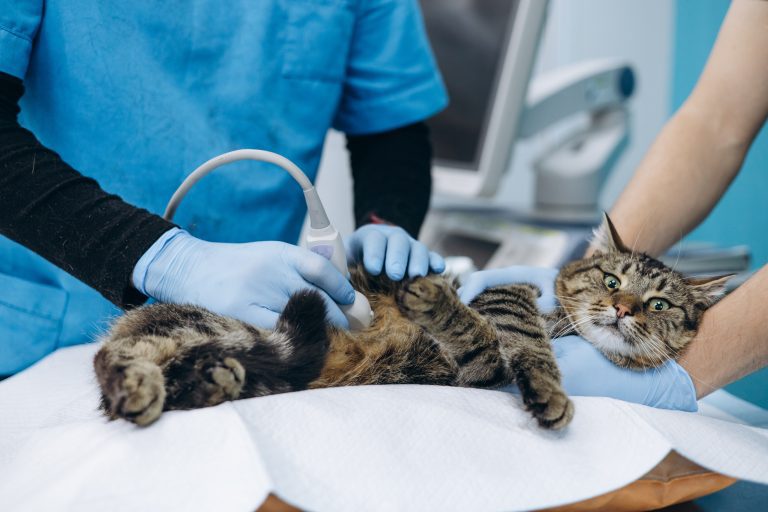
Ultrasound is often used to assess soft tissues, fluid accumulation, or specific organ concerns. It provides a more detailed evaluation of abdominal organs and can complement X-rays.
When CT May Be Needed
CT imaging provides advanced, cross-sectional detail and is often reserved for complex trauma, head injuries, or cases where standard imaging cannot fully explain the problem. If CT is necessary, we stabilize your pet and coordinate referral to a specialty facility.al.
How Quickly Can an Emergency Veterinarian Perform X-Rays for Injuries?
In urgent care, timing is critical. X-rays are often performed shortly after your pet is stabilized. Because we use digital imaging, results are available within minutes.
How Triage Impacts Imaging Speed at Summit Veterinary Urgent Care
Our triage system prioritizes patients based on medical urgency. Pets experiencing severe respiratory distress or life-threatening trauma are treated first. Once stable, imaging is performed promptly to guide treatment decisions.
This efficient approach supports our mission of providing progressive and efficient urgent veterinary medical care in Decatur and across North Alabama.
Will My Pet Need Sedation for an Emergency X-Ray?
Most pets do not require heavy sedation for standard X-rays. With gentle handling and proper positioning, many animals tolerate imaging well.
When Sedation Is Not Needed
If your pet is calm and able to remain still, sedation is usually unnecessary.
When Mild Sedation May Be Recommended
- Mild sedation may be advised if:
- Movement could compromise image quality
- A fracture is painful
- Anxiety makes positioning unsafe
What Happens During an Emergency Vet Visit?
Understanding what to expect during an emergency visit can help reduce stress for both pets and owners.
When you arrive at our clinic:
- Pets are evaluated through a triage process to determine urgency
- Critical patients are treated first to stabilize life-threatening conditions
- Clear communication is provided about findings and treatment options
- Owners are encouraged to remain with their pets when possible
- Patients are stabilized and referred to a 24/7 emergency facility if hospitalization is required
Our fear-free, low-stress environment is designed to keep pets as comfortable as possible throughout their visit.
Why Choose Summit Veterinary Urgent Care for Your Pet’s Emergency Treatment?
Summit Veterinary Urgent Care offers a trusted solution for after-hours and urgent veterinary needs in Decatur, Priceville, Huntsville, and the surrounding North Alabama area.
Pet owners choose our clinic because we provide:
- After-hours urgent pet care without prolonged emergency room wait times
- Treatment for dogs, cats, small mammals, small ruminants, and limited avian cases
- A triage-based approach that prioritizes the most critical patients
- An open-concept clinic that allows owners to stay with their pets when possible
- Care led by Dr. Lauren Smith, whose background focuses on emergency and critical care
Our goal is to deliver efficient, compassionate care when your pet needs it most.
Do Not Wait When Your Pet Needs Emergency Care
Delaying emergency veterinary care can place your pet at unnecessary risk and limit treatment options. If your pet is sick, injured, or showing concerning symptoms, early care can make a significant difference in comfort and recovery.
If your pet needs urgent medical attention, contact Summit Veterinary Urgent Care in Decatur, AL at 256-937-7776. Walk-ins are welcome, and our team is here to provide compassionate emergency care when it matters most.
Sources
- American Veterinary Medical Association, Emergency Care for Pets
- Veterinary Emergency and Critical Care Society
- ASPCA Animal Poison Control and Emergency Guidelines